You have responsibility for trade compliance records if your function develops, assesses, endorses, stores, or uses import, export, customs, sanctions, or licensing documents. That typically includes trade compliance, logistics, procurement, customs brokers, finance, legal, and IT. You must keep complete, traceable records that confirm classification, valuation, origin, screening, licensing, filings, corrections, and retention rules. Clear ownership eliminates gaps, inconsistent files, and delayed responses to audits or government inquiries. The sections below describe duties, records, retention, and controls.
Main Lessons
- Trade compliance records are paperwork and system data showing imports and exports observed customs, export control, sanctions, and reporting rules.
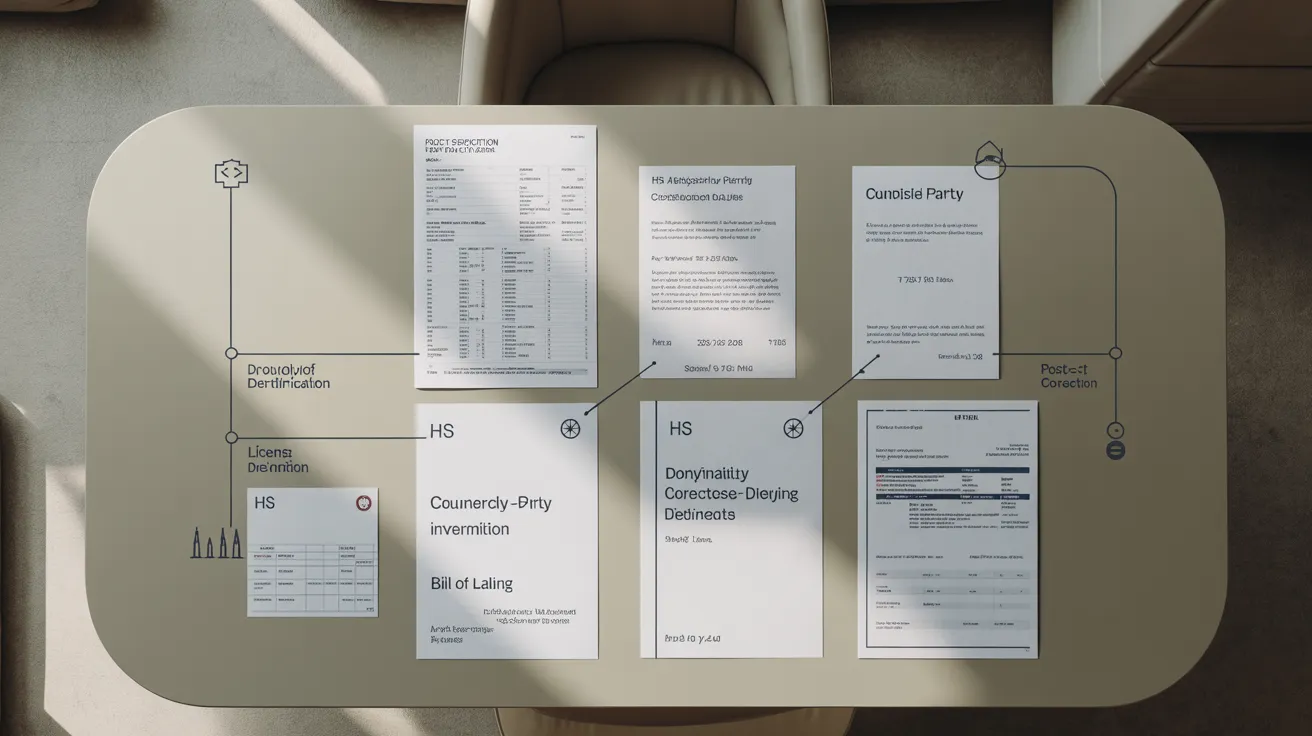
- They include categorizations, assessments, origin support, examination findings, licenses, invoices, transport documentation, import overviews, and transaction history.
- These records produce a documentation trail tying together products, parties, jurisdictions, filings, and any corrections or inconsistency resolutions.
- Companies store them to assist with audit procedures, promptly respond to government requests, and show controls were consistently applied across transactions.
- Ownership, retention, access controls, and version management are vital so records stay whole, trustworthy, and findable when needed.
Understanding Commercial Regulatory Documents
Trade compliance records are the documents and data your company creates, receives, and retains to demonstrate that each shipment, sale, resale, movement, or associated deal complied with applicable customs, export control, sanctions, and trade reporting obligations. They offer an traceable trail demonstrating how you classified goods, vetted parties, applied licenses or exceptions, priced entries, reported shipments, and resolved discrepancies.
You use these records to substantiate decisions, support internal controls, and respond to government inquiries, audits, or investigations. Effective trade document retention maintains evidence integrity, accessibility, and traceability across systems and functions. Your record set also includes compliance training logs, policy acknowledgments, escalation notes, and corrective-action documentation because regulators judge whether your program operated consistently, not merely whether a transaction cleared. Accurate records reduce exposure and strengthen defensibility.
What Trade Compliance Files Prove Required to Store?
Commence by preserving every record that depicts how you ascertained, performed, and observed a regulated transaction from initiation through post-entry or post-shipment review. Maintain product data, tariff classification analyses, valuation support, origin determinations, broker instructions, commercial invoices, packing lists, purchase orders, shipping documents, entry summaries, and payment records.
You should also preserve export controls documentation, including screening results, licensing decisions, permits or exemptions applied, end-use and end-user declarations, technical data assessments, and internal approvals. Keep communications with customs brokers, shipping companies, suppliers, and regulatory bodies when it impacts compliance choices. Keep audit trails from your ERP, denied-party screening system, and classification systems. If you amended a submission, retain the amendment, supporting documentation, and proof indicating when you identified and resolved the discrepancy.
Why Is Trade Compliance Records Significant?
Your regulatory compliance records are important because they help you prevent regulatory violations, ensure accurate filings, and record the basis for each transaction. When customs authorities or other agencies review your operations, thorough records let you respond quickly, confirm adherence, and reduce exposure to penalties, shipment delays, and enforcement actions. They also keep you audit-ready by showing that you’ve website implemented necessary controls, kept essential data, and followed recordkeeping rules consistently.
Regulatory Risk Prevention
Because customs authorities and other regulators can audit prior shipments long after clearance, complete trade regulatory documentation reduce your exposure to penalties, shipment holds, license violations, and false declaration findings. You need records that substantiate tariff classification, customs valuation, origin, license determinations, screening results, and broker instructions. When documentation is consistent, current, and retrievable, you can avoid discrepancies from escalating into seizures, liquidated damages, or enforcement referrals.
You also solidify protective frameworks by anchoring documentation to customs training and vendor review. Certification documentation prove employees followed authorized guidelines when submitting declarations and evaluating restricted-party hits. Supplier vetting files validate your dependence upon vendor data, including origin statements, product specifications, and valuation inputs. Together, these records allow you to locate noncompliant transactions early, amend data defects, and maintain defensible import and export decisions.
Audit Preparedness Perks
Preserving detailed, well-organized compliance records keeps you prepared for inspections and lets you react fast to customs, export control, and sanctions communications. You can retrieve classifications, licenses, denied-party screening results, origin support, valuation data, and shipping documents without delays. That speed demonstrates governance, decreases examiner inquiries, and reduces disruption to business.
Strong document retention practices also facilitate you prove regularity across transactions, functional areas, and temporal spans. You create a reliable verification chain that links decisions to source documents, confirmations, and system entries. If inspectors test a representation, you can substantiate declarations, license exceptions, and screening outcomes with documented proof. You also uncover issues earlier through organizational audits, correct recordkeeping weaknesses, and strengthen your leverage before assessments, disclosures, citation determinations, or regulatory steps manifest.
What Duration Is Suitable for Holding Trade Compliance Documents?
Although retention periods vary by territory and kind of transaction, you should preserve trade compliance records for at least the lowest duration needed by the regulations that control the importing, exporting, sanctions, and customs matters at issue, and you should calculate that duration from the legally relevant trigger date, such as export, customs entry, permit expiry, or completion of the transaction.
You should verify the exact rule for each regime you handle, because data retention timers don't always start on the same event. Your document retention schedule should cover entries, licenses, classifications, screenings, communications, and supporting commercial documents. Apply data minimization carefully: keep what the law requires, preserve what substantiates compliance decisions, and delete excess material when permitted. If litigation, an inquiry, or an audit begins, suspend ordinary deletion until the hold is lifted.
Who Is Accountable for Trade Requirements Records?
You must allocate explicit stewardship for trade compliance recordkeeping, because accountability can't be assigned to an indistinct team or informal system. You should designate the liable department, codify its authority, and verify it sustains thorough, precise, and findable records. You also can't view record administration as an standalone undertaking, since compliance, logistics, finance, procurement, and legal each contribute records and share liability for their validity.
Record Management Ownership
Before shipment dispatch, paperwork submission, or examination occurs, make sure to assign record maintenance duty, since customs and export authorities hold the importing party, exporting party, filer, or other participant identified in the transaction liable for producing complete and accurate trade compliance records.
You should define ownership models that specify who controls development, assessment, storage, access, and destruction of each record category. Your classification must align with the authorized position on the transaction and the system where original information comes from. Effective data stewardship means you delegate authority to oversee version control, protect file information, verify changes, and avoid unauthorized deletion. You also need documented procedures that designate the information custodian for transaction logs, billing documents, categorizations, permits, screening results, and broker instructions. If responsibility isn't explicit, retention gaps, conflicting records, and delayed production during audits grow far more probable.
Cross-Functional Accountability
Ownership of records lays down the baseline, but cross-functional accountability influences whether those records remain complete, accurate, and producible throughout the transaction lifecycle. Trade compliance alone is not sufficient. Procurement, logistics, customs brokers, finance, IT, and legal each form, transmit, validate, or keep record elements subject to retention, audit, and disclosure requirements.
It is important to assign documented roles for data entry, classification support, origin substantiation, broker instruction review, shipment document reconciliation, and system access controls. Strong cross border coordination guarantees documentation align across jurisdictions, languages, and platforms. Strong stakeholder engagement helps you resolve discrepancies before filings, entries, or post-entry corrections occur. Create escalation paths, version control, retention triggers, and periodic testing to ensure every function can demonstrate accountability and deliver defensible records on request during audits or government inquiries.
How Should You Organize Trade Compliance Records?
Typically, the most effective approach to organize trade compliance records is to mirror your genuine commercial activity so each file connects the item, parties, jurisdiction, classification, licensing determination, screening results, shipping documents, and post-entry activity in one traceable sequence.
You should apply consistent document categorization rules by transaction, product, customer, supplier, and country, then index each record with version control, responsible owner, and effective date. Follow standardized folder structures and naming conventions so auditors can obtain source documents, correspondence, certifications, and system outputs without delay. Your retention scheduling should follow applicable customs, export controls, sanctions, and tax requirements in every relevant jurisdiction. Maintain secure access controls, audit trails, and cross-references between physical and electronic repositories so you can show completeness, integrity, and timely retrieval during reviews or government inquiries.
What Import/Export Compliance Documents Mistakes Are Widespread?
Common errors in trade compliance record keeping usually stem from gaps in completeness, consistency, and retention rather than from a single missing document. You often see files that lack commercial invoices, packing lists, broker communications, or internal approvals, resulting in missing records that undermines traceability. You may also retain records in different formats without version control, which makes reconciliation difficult during reviews.
You can also generate danger when you maintain records under varied naming conventions, split related entries across platforms, or fail to document amendments. Wrong classifications, unsupported country-of-origin determinations, and disconnected valuation support are common errors. If you don't align retention periods with applicable import, export, and sanctions requirements, you compromise record integrity. You should also watch for incomplete audit trails, redundant files, and records that cannot be readily supplied promptly.
Why Are Trade Compliance Records Critical for Avoiding Penalties?
Strong trade compliance records reduce fine risk because they allow you to show what you stated, when you stated it, and the basis for each decision. During an audit, you can produce entry data, invoices, rulings, licenses, and broker instructions that validate reported value, origin, and admissibility. That proof shows reasonable care and constrains claims of negligence.
You as well prevent repeat errors by documenting controls around classification systems, restricted-party screening, valuation methods, and record retention. If customs questions a discrepancy, you can follow the transaction, identify the approver, and show corrective action. Records from training programs further demonstrate that staff members comprehended procedures and escalation requirements. With complete, contemporaneous files, you reduce response times, support prior disclosures, and reduce the likelihood of seizures, liquidated damages, and civil penalties.
Often Raised Inquiries
Should Small Enterprises Hand Off their Trade Compliance Record Keeping Securely?
Yes, you can entrust compliance record management securely if you manage vendor exposures through strong contracts, limited permissions, encryption, and audit rights. You should prioritize vendor assessment by evaluating the vendor's regulatory background, information storage practices, incident response, and controls. You must also verify jurisdictional obligations, availability, and retention timeframes. If you monitor performance and record oversight, you'll reduce liability and ensure compliance with relevant compliance standards.
What Role Do Electronic Systems Play in Enhancing Trade Compliance Record Exactness?
Digital systems boost your trade compliance record accuracy by standardizing entries, identifying issues, and maintaining records. You reduce manual input, prevent duplicate records, and maintain version control. With automatic checking, you catch missing data, inconsistent classifications, and expired licenses before filing. With artificial intelligence matching, you compare invoices, entries, and shipping records quicker and more precisely. You also reinforce retention compliance, retrieval speed, and defensible documentation during regulatory audits.
Are Commerce Regulatory Record Requirements Varied Across Countries?
Yes, you must expect trade regulatory record requirements to differ across countries. Domestic differences affect retention periods, acceptable formats, retrieval regulations, and inspection expectations. You also need to track record limits, because authorities may require distinct supporting documents based on consignment worth, item category, origin, or licensing status. If you standardize essential documents yet map regional requirements region by jurisdiction, you'll reduce violations, support customs inquiries, and maintain justifiable compliance controls.
What Programs Prepares Employees Manage Trade Compliance Records Competently?
You assist employees oversee trade compliance records efficiently through focused recordkeeping training, export controls coursework, classification instruction, and audit-readiness drills. You must cover retention periods, document accuracy, restricted-party screening support files, licensing records, and escalation procedures. You also must provide role-based training for shipping, logistics, sales, and compliance staff. Through refresher sessions, testing, and documented attendance, accountability is strengthened and you help demonstrate consistent compliance during internal reviews and government audits.
How often Should Companies evaluate Their Trade conformity Records?
You should assess your trade compliance records at least annually, with annual inspections covering core materials, maintenance, classification, credentials, and filing accuracy. You should also use risk based audits more frequently when your company carries out high volume shipments, regulated products, new markets, or prior violations. If your risk profile changes, you should raise audit frequency promptly. This framework helps you discover gaps, correct errors, and support ongoing regulatory compliance.
Conclusion
Trade compliance records act as your paper trail through customs, audits, and enforcement reviews. Maintaining complete, exact, and timely records allows you to create a clear line of sight from labeling and evaluation to licensing and shipment history. This discipline helps you demonstrate due diligence, correct errors efficiently, and limit penalty exposure. Store records systematically, retain them for the required duration, and assign ownership. In a regulatory storm, well-kept records serve as the lantern that keeps your operation on course.